

You might think word of mouth marketing and referral wouldn’t work for insurers because insurance isn’t a product that your customers want to talk to their friends about. But you’d be wrong, and here’s why.
The truth is that insurance is a product that people do talk about, simply because it’s an important decision where the consequences of getting it wrong can leave you undercovered or, in the worst cases, without cover in the case of an event like a fire, flood, traffic accident or health incident. It’s one of the occasions where you are actually likely to ask the advice of a trusted friend or colleague.
As well as the importance of the decision, there’s also the fact that, for the average Joe in the street, it’s almost impossible to tell one insurer from another or one policy from another. That’s unless you have been studying for a law degree and have a liking for small print. Because from the ads and the websites of insurers, it’s almost impossible to know if one insurer is better than another. For example, how do you know that:
- the customer service is good, with low call waiting times and staff who actually speak your language properly?;
- the insurer deals with claims quickly and pays out rapidly?;
- the insurer doesn’t rely on ambiguously worded small print to avoid paying out claims fairly, or at all?;
- the insurer doesn’t bait and switch, by offering a low premium to get you to sign up in year 1 and then mercilessly increase your premiums year after year for little apparent reason?;
- etc.
The best person to tell you this is a current customer who’s had a claim and/or who’s been with the insurer for a few years, because until you’ve had a claim or passed a few renewal periods, you can’t really tell. And interestingly, our recent Referral Codebreakers research identified that a customer was most likely to refer a brand after a successful interaction with customer service.
Of course, you can look at ratings and reviews online, or look at advice on consumer sites like Citizens Advice or MoneySavingExpert or price comparison sites, but survey after survey tells us that consumers just don’t trust ads, brand websites or celebrity endorsements and increasingly don’t trust influencers. But what they do trust above all are friends and family.
And, in looking at why referral works so well, the researchers at the Keller Center for Research at Baylor University identified a factor called social matching, whereby when recommending a product or service, a customer knows not only the friend really well but also the company and its products and services. So a recommendation can be not just an insurance company, say AXA, but a particular policy well suited to the friend, such as this AXA home policy.
In other words, you have:
- An important decision where you value the advice of friends;
- Where only actual customers can give a credible recommendation;
- Where that recommendation is precisely targeted and comes from a trusted source.
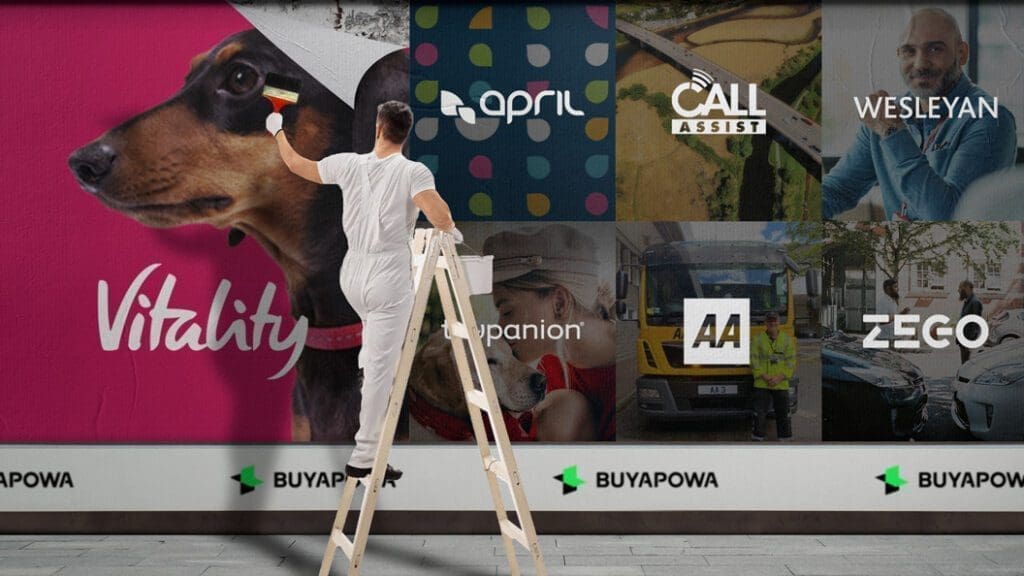
No wonder so many leading insurers, from AXA, Admiral, Vitality, Trupanion, the AA, Tesco, Wesleyan, April, and Zego etc. have made referrals a key part of their customer acquisition strategy.
Referrals bring better customers at a lower cost
Across all industries, the tactics that marketers knew and loved just don’t seem to work as well as they did, that’s if they work at all. The reasons are a combination of factors including:
- The ever-increasing costs of digital marketing making it harder to get a positive ROI;
- The fact that less people see your ads due to ad blockers, spam filters and banner blindness as well as societal changes such as millennials and Gen Z often not owning a terrestrial TV, preferring online streaming (Netflix, Amazon Prime, Disney+) or simply video gaming;
- That Organic Social is dead, as the owners of the social networks have stopped unpaid brand posts appearing in user feeds;
- The increased difficulty of building and using an opt email database due to regulations like GDPR and the CCPA;
- The decreasing loyalty of customers, who are increasingly likely to switch for a better deal
Of course, the problem is more acute in insurance due to the high competition for clicks, impressions and leads, where last year Wordstream reported that the average CPC in insurance in North America was US$54.91. And that’s just for a click!
As a result of the high prices for paid search, affiliate commissions are generally high with these examples reported by Authority Hacker:
- AllState: US$28 a lead
- Gerber Life: US$25 per sale
- Lemonade: US$25.50 per sale
- Petplan: US$25 a lead
- etc
Another marketing challenge for Insurance is capture by price comparison sites like Honey, Go Compare, Compare the Market and Money Supermarket with huge marketing budgets and highly effective SEO which intercept traffic at the end of the funnel. This can have the effect of turning free natural search traffic into paid traffic. Of course, the price comparison sites will argue that they also bring traffic to insurer’s websites that isn’t tracked as sale by them, and is effectively free traffic. But overall, these sites generally represent a significant cost for the insurer’s marketing budget.
Given these economics, no wonder that we were told that a leading UK insurer didn’t make any profit on customers acquired via Google Search until the second renewal, or that an Italian auto-insurer was underwater more for than half of the last fifteen years due to a combination of high marketing costs and fierce competition pushing down premiums.
We’ve long been advocating that marketers stop pouring more and more money into the coffers of Alphabet, Meta, Tik Tok and Twitter and instead embrace more cost effective and ethical marketing, such as the example of Airbnb and Organic Discovery. That’s because, by comparison, referral marketing can deliver much better customers at a lower cost than just about any marketing channel. Part of the reason for this is that, as the Keller Center research showed above, a referral can reach the right person at the right time, from a trusted source recommending a specific product with an incentive to act now. And as the same research also pointed out, good customers tend to socialize with people like themselves who share the same values, demographics and interests. So a good customer is likely to know other potential good customers etc.
And also referrals can complement other marketing efforts. For example, if you’ve worked hard to improve customer perceptions and this is evidenced in excellent ratings and reviews and NPS (like the insurers with outstanding NPS scores identified by CustomerGauge), you can use those as evidence to convince referred-in customers to join up. Or, if you decide to invest in brand marketing to broadcast your message and you have good customer reviews, you can highlight that in adverts and use referral marketing to capture that good perception and drive customer acquisition.
Research from among our customers has shown that, by implementing and promoting a referral program well, insurers can see up to:
- Conversion rates 5.2x those of traditionally acquired customers;
- 90% higher lifetime values;
- Customers who stay 1.8x longer;
- 20x ROI;
- 56% less churn.
What else can you do with Reward Marketing, beyond Referral?
Of course, when you’ve spent so much to acquire each new customer, you want to make sure that they stick around long enough to deliver a Customer Lifetime Value (CLV) higher than your Cost of Customer Acquisition (CAC). And this is where the intelligent use of rewards marketing can come into play.
I’m sure you know the famous quote that acquiring a new customer can cost anywhere from five to 25 times more than retaining an existing one. And the research from Frederick Reichheld of Bain & Company that showed increasing customer retention rates by 5% increased profits by 25% to 95%. And using rewards to encourage retention by showing gratitude and offering recognition can play a key part in improving retention.
And already many insurers make use of rewards to encourage actions, from asking for a quote, taking out a policy, completing a survey or leaving a review, to renewing, paying X premiums or even going to the gym. Rewards can even just be linked to an occasion such as a birthday or anniversary, to increase the feel good factor and show some recognition for customer loyalty. Some insurers also use rewards with above the line advertising, offering a reward for all who subscribe citing the keyword from the advertisement. This not only makes the call to action in the advertisement more effective, but provides another means to measure the efficiency of brand marketing.
What next?
If you’d like to know how rewards marketing or referrals could work with your business, and/or if you’re fed up paying ever more and more for performance marketing, then we’d love to talk. We can run through some of the case studies mentioned in this article and see how we could get you set up too.