

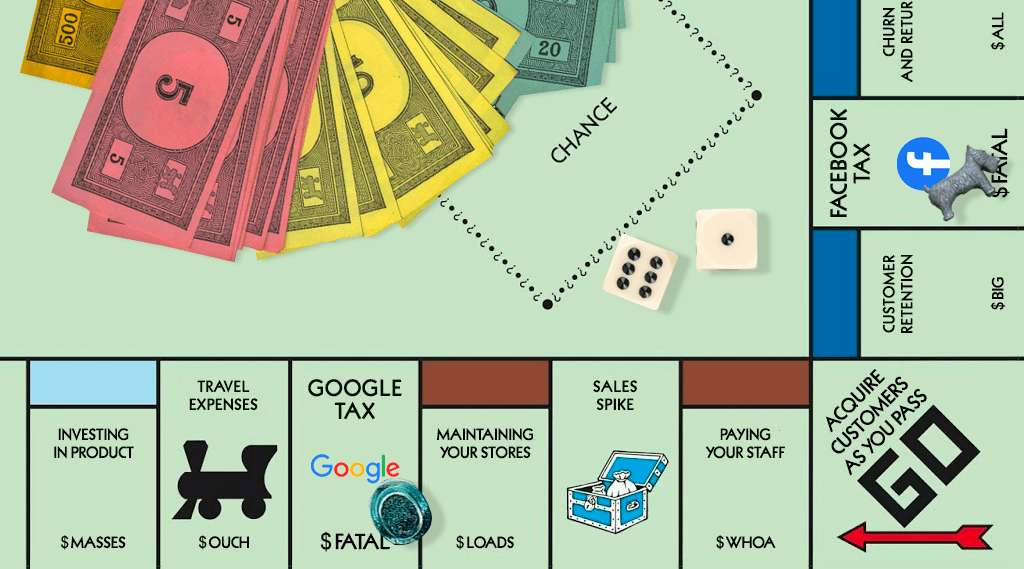
When we first wrote this article back at the end of 2020, the World was consumed by the fear of Covid-19, but despite the challenges brought by the global pandemic, Airbnb sounded a message of hope by declaring how it had managed to finally free itself from servitude to Google, Amazon, Facebook and Apple (‘the GAFA Tax’) and managed to generate 90% of all traffic without paying the GAFA Tax. And what’s amazing is that fully 4 years later, that remains the case, as Airbnb’s co-founder and CEO, Brian Chesky revealed that the brand still gets “the majority, 90% of our traffic is coming to us through direct or unpaid traffic.”
So what do we mean by Organic Discovery?
By Organic Discovery, we mean first creating a delightful and unique customer experience, such that your visitors will want to talk about you and share their experience with others. And then taking active steps to maximise the likelihood that your customers will create positive reviews on and off your site, blog about you, share photos on Instagram and refer friends to you. All of which won’t involve emptying your marketing budget into GAFA’s coffers each month. We predict that, as this trend gathers pace, it’s going to hit GAFA directly in their pockets, as brands and retailers switch spend away from paid and performance marketing towards a more sustainable model.
At first blush, you might think that strange, given the ever increasing market capitalizations of Alphabet, Meta , Apple and Amazon, all being in the trillions of US dollars. But often great societal and economic changes start slowly and often go unnoticed until suddenly they’re everywhere.
Airbnb first announced the success of their Organic Discovery strategy ahead of their IPO back in 2020 in their SEC filing which declared:
Most of our guests discover Airbnb organically, with approximately 91% of all traffic to Airbnb coming through direct or unpaid channels during the nine months ended September 30, 2020.
And as you can see from the quote above, that successful strategy continues today. If Airbnb can do that, so can you.
So what did Airbnb do?
To understand just what Airbnb did, their SEC filing was very insightful.
For a business that generated US$4.8bn in revenues in 2019, it listed total spending on sales and marketing as US$1.6bn, or 34% of revenue. But that was all sales and marketing expenses – including brand and performance marketing, personnel-related expenses including field operations (and stock-based compensation for those staff), policy and communications, portions of referral incentives and coupons, and allocated costs for facilities and information technology.
And, while Covid-19 saw Airbnb’s revenues drop 72% in 2020, it spent just US$545m in the first nine months of that year to generate US$2.5bn in revenue over the same period. Reducing the total percentage sales and marketing spend to just 22% of revenues.
Just how they were able to maximise Organic Discovery became clear from the filing:
The Airbnb model requires two elements: hosts and guests. In its filing, the company stated: ‘hosts and guests attract each other to Airbnb, creating a global network across more than 220 countries and regions.’
When it comes to guests, most discovered the site organically, with approximately 91% of all traffic to its site in 2020 coming through direct or unpaid channels. Their strategy post IPO is stated to be to continue to grow and engage their guest community.
“We intend to attract new guests to Airbnb and convert more of them into brand advocates. We will continue to focus on engaging our existing guests to return to book and to use Airbnb with more frequency.”
Whereas, when it comes to hosts, the filing stated:
“We attract new individual hosts predominantly through organic channels such as word of mouth and our strong brand recognition.”
Key to understanding the motors of success behind Airbnb is its ability to create a safe environment where millions of strangers can trust one another. The filing stated:
“The key was trust. The solution… combined host and guest profiles, integrated messaging, two-way reviews, and secure payments built on a technology platform that unlocked trust, and eventually led to hosting at a global scale that was unimaginable at the time [the business was created].”
The whole Airbnb experience creates an ecosystem of high trust and confidence, with highly engaged guests creating value for hosts and other guests through reviews. An amazing 68% of all guests left reviews in 2019 and, altogether, guests and hosts have written more than 430 million cumulative reviews as of 30 September 2020. As seen from the quote above, trust is generated through secure messaging and account protection, risk scoring, secure payments, watchlist and background checks, cleanliness standards, fraud and scam prevention, insurance and protections, and a solid guest refund policy etc.
Obviously, trust alone is not enough to generate positive word of mouth, but the brand achieves this by offering a great user experience, with unique locations and experiences across 1,000 cities available at very competitive prices. This combination of high trust and a great experience creates the perfect launchpad for word of mouth, as stated below:
Once they become a part of Airbnb, guests actively participate in our community, return regularly to our platform to book again, and recommend Airbnb to others who then join themselves. This demand encourages new hosts to join, which in turn attracts even more guests. It is a virtuous cycle — guests attract hosts, and hosts attract guests.
As a result, in 2019 alone, 54 million active bookers worldwide booked 327 million nights and experiences on the platform.
Then along came Covid-19
Obviously, it would be impossible to write any article about the travel industry in 2020 without mentioning the huge disruption caused by Covid-19 and the associated travel bans and lockdowns. When borders closed and travel stopped, Airbnb responded to the challenge by substantially suspending all discretionary marketing program spend at the end of the first quarter of 2020.
This meant that they paused spend on new initiatives and performance marketing, and shifted the focus to brand marketing and strengthening the infrastructure that supports unpaid channels. As a result, the visitor mix switched from 77% from direct and unpaid channels in 2019 to 91% in 2020. And, as you can see from the quote from Brian Chesky above, this change in strategy survived the end of Covid-19.
Be like Airbnb: free yourself from GAFA’s chains
Now, we aren’t expecting that you paint your face blue, don a kilt and start screaming ‘Freedom’ in a faux-Scottish accent. Nor are we expecting you immediately to stop spending money with GAFA. But it starts here and now. And it starts with realising that you are not condemned to paying taxes to GAFA for the rest of your existence. There are alternatives, and the example of Airbnb’s use of Organic Discovery should inspire you.
After all, Airbnb isn’t doing anything revolutionary. It’s just going back to the roots of marketing, back before we knew to even call it marketing, when there weren’t any agencies to speak of – never mind smartphones, internet and social networks. It begins with having a great product or service at a competitive price, providing a top notch customer experience and excellent customer service. The kind of thing that makes your customers want to become brand fans, and want to talk about you to their friends. Just like the early days of Apple, and the Apple resurgence in the first decade of this century; before the money men took over, the product quality went down and the prices went up. What we’re talking about is nothing more than natural word of mouth.
But, while natural word of mouth is great, it’s not enough to get you where you want to be. You can’t just be an idle bystander and expect to benefit. You have to get involved, to make Organic Discovery work for you. For a start, you have to recognise the power of word of mouth and seek out your potential brand advocates – people who’ve given you positive reviews, or shared images of their experience with your brand. You have to thank them for the love they’ve already shown you, and ask that they share it with their friends and family. You need to give them an easy and safe way to share, a way that respects the privacy of their friends. Then you need to reward them for the effort they’ll be making on your behalf, and give them a tempting incentive to help convince their friends to try you.
And, when you consider that Buyapowa’s Reward Revolution research found that 95% of people have referred a friend in the past year and an amazing, the power of referral marketing is evident. Furthermore, our Referral Codebreakers research found that across all age groups, about eight out of ten people want to refer their favourite brands and almost two thirds of all respondents said they’d view a brand positively or slightly positively if they knew it had a referral program.
But you can’t stop there. You want your brand advocates posting and sharing again and again and, what’s more, you want the people they bring to you to become brand ambassadors in turn. To do this you need to use clever psychology and encourage repeat advocacy with gamification, and with intelligent and tiered rewards. And you need to nurture their engagement, not merely reaching out one time before going quiet, but reminding them with regular communications across all your natural customer touchpoints, and by using triggers like a birthday, an upgrade, a renewal or an anniversary of becoming a customer to nudge them to share again.
Hear from David Hixon, Executive Director – Head of Product & Lifecycle Marketing at Ally Bank why it feels so much better to pay referral rewards to your customers instead of paying money to ad platforms:
Would you rather pay your customers over ad platforms? | Ally
David Hixon: "I think like most marketers or most data driven marketers, we pay a lot of attention to the cost to acquire and cost per customer and things like that.
Our cost to acquire a traditional customer through traditional marketing channels is probably four to 5x what it is through the referral program. So it's a dramatic decrease in terms of cost to acquire.
But a metric or maybe a way of thinking about it that I really love is, the cost to acquire is a lot cheaper, which is great, but also where I'm paying that money is way better.
I'd much rather give an existing customer $100. Or $250 and presumably build up some loyalty with that than I would to one of the platforms to go out and do programmatic display or however we might use it.
It just feels better. We haven't quite figured out yet how to quantify that yet, but there's a big loyalty thing happening when I'm giving my marketing dollars to my customers versus to an ad platform or something like that.
See the full interview here.
Supercharging Word of Mouth
Everything we’ve written about above turns Organic Discovery from a latent marketing channel into a powerful one. But what can supercharge it so that it becomes your largest marketing channel is extending the influence of brand advocacy beyond just your customers. You can achieve that by using the same tactics and tools with your employees, your influencers, your affiliates and your business partners.
“A way of thinking about [referrals] that I really love is… where I’m paying that money is way better. I’d much rather give an existing customer $100. Or $250 and presumably build up some loyalty with that than I would to one of the ad platforms to go out and do programmatic display or however we might use it.
David Hixon, Executive Director – Head of Product & Lifecycle Marketing at Ally Bank
Your employees are some of the most credible influencers you have at your disposal. Not only do they know your products or services inside out, but their livelihoods are connected with the success of your business. And their recommendation is going to be so much more convincing if they themselves are avid users of your product. Imagine how powerful it is when your old school friend, who works for Weber, invites you over for a barbecue and shows you how he cooks meat to perfection with the precision grilling tools on his Weber BBQ. Even more so if he offers you the opportunity to get a 15% discount off your purchase, simply by virtue of knowing him.
Influencers large and small – and even micro – offer the ability to get your product in front of their audiences on Instagram, Twitter and TikTok. Marketing funnels all begin with awareness and, when your potential customer base is paying more attention to social media stars than terrestrial television advertisements, that’s where you need to play. So why not arm your influencers with images and unique sharing links, with gamified rewards that increase as more of their followers become shoppers, subscribers and clients?
Conversions from your affiliate channels can also be supercharged by offering gamified rewards for higher performance. And you can massively extend the reach of your efforts by allying with partners and publishers to promote your brand to their own audiences. If you truly offer a great product or service at a competitive price, then your partners should have no problem recommending you to their own customer base. And that customer base should have no problem in recommending you to their friends outside of the reach of your partner’s direct efforts. That’s how you can really scale Organic Discovery.
So what next?
Of course, we don’t expect this to happen over night – and we certainly don’t advise selling your GAFA shares right now based on this article. In all probability, due to the market forces we mentioned above, it is likely that GAFA’s combined revenue and market cap will continue to grow for a few years yet. But what will certainly happen in future is that more enlightened brands and retailers will start taking the first steps to free themselves from their dependency on the quadrumvirate, fed up with forking over an ever-increasing share of their profit margins year after year. Instead, they’ll look to Organic Discovery, supercharged with the right referral marketing and advocacy software, armed with tactics to help build self-sustaining direct and indirect channels that deliver better customers at a lower cost.
If that sounds like you, let’s talk about how we can set you on the path to freedom.